Digital Transformation: The Buzzword That Promises Everything
Digital Transformation isn’t dead—it’s undead. Every few years, it claws its way back onto every roadmap, strategy slide, and LinkedIn post. Each time, it promises everything, and each time, we forget to ask: “What does it actually mean?”
Here’s the thing: the term itself is brilliant marketing. It’s vague enough to mean anything, yet grandiose enough to sound like the solution to every problem. But as you sit through yet another Digital Transformation workshop, you start to wonder: is this really transformation, or just PowerPoint theater?

A Real Problem, Wrapped in Fluff
Let’s be fair: businesses do need to modernize. Legacy systems, manual processes, and outdated customer experiences are holding many back.
But calling it “Digital Transformation” doesn’t fix the problem—it just gives it a shiny label. It’s a feel-good buzzword that distracts from the real work. Transformation isn’t about workshops, consultants with fancy slide decks, or vague declarations of becoming “future-ready.”
And let’s be honest—half the time, “Digital Transformation” is just a fancy way of saying, “we finally upgraded from Excel spreadsheets.” But hey, throw in a few workshops and a dashboard, and suddenly it’s a revolution.
The real problem? “Digital Transformation” doesn’t actually transform anything. It just gives everyone something to talk about while the real problems fester in the background.
Why It’s Backwards: Focusing on Hype, Not Value
The problem isn’t the need for change—it’s the phrase itself. “Digital Transformation” has been used for so many things, it’s meaningless now.
Somehow, it covers everything from adopting IoT sensors in factories to implementing AI chatbots for customer support. One year, it’s Big Data. The next, it’s blockchain. Now it’s LLMs. The message is always the same: “This one thing will transform everything!” But it rarely does, because no one ever asks: “Transform what, exactly?”
Instead, you get conversations like:
- “We need Digital Transformation!”
- “Okay, what’s broken?”
- “Uh… let’s get everyone in a workshop and align on that.”
And so it goes—round after round of workshops, meetings, and fancy buzzword-stuffed slide decks, while the actual problems remain untouched.
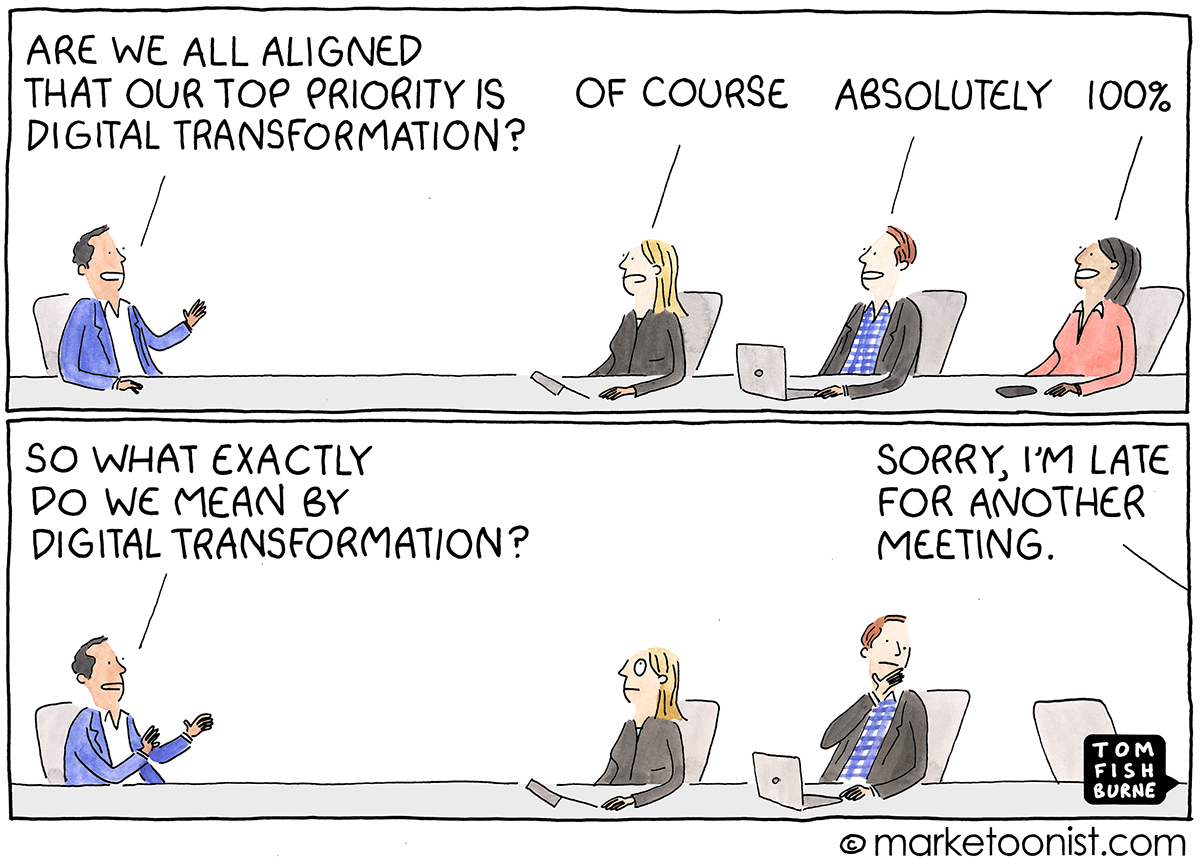
The above cartoon by Tom Fishburne seems sort of fitting, and comes with another highly recommended read on marketoonist.com
The Consultant’s Role: Guns for Hire or Builders of Value?
As consultants, we’re often brought in to deliver these so-called transformations. Sometimes we know exactly what’s happening: the shiny thing we’re being asked to build isn’t going to improve much. It’s just a way for someone to prove “progress” is being made—whether it actually helps or not.
Sure, we can build shiny stuff. But the real joy of consulting comes from building things that matter. Improving workflows. Automating arcane processes. Helping teams lay a foundation for future success. That’s what drives us—it’s why we do what we do.
We heard a great analogy at KCD Denmark this year that we’ll blatantly steal borrow:
We’re not here to cut down the forest for you. We’re here to sharpen your axes so you can do it yourself—and keep doing it long after we’re gone.
Why “Transformation” Needs to Evolve
Here’s the thing: the best transformations don’t start with buzzwords. They start with problems.
Instead of chasing the next trend, ask yourself:
- “What’s actually broken?”
- “What do we need to fix?”
- “How can we make this easier, faster, or better?”
If AI/ML helps, great. If not, don’t force it. The goal isn’t to impress anyone with flashy tech. It’s to solve real problems and deliver real value.
The Last Real Digital Transformation
Here’s the thing about real transformation—it happens when there’s an actual problem to solve, not just a trendy technology to implement.
Take the rise of video conferencing and remote work during COVID-19. Organizations didn’t adopt Zoom, Teams, or Slack because they were shiny or cool. They did it because they had to. The problem was real and immediate: how do we keep the lights on when everyone’s working from home?
The result? A massive shift in how businesses operated, with tools that solved an actual need. It wasn’t about hype—it was about survival. That’s the kind of transformation that makes a lasting impact.
Contrast that with today’s buzzword-laden initiatives. Implementing AI chatbots or blockchain-backed workflows isn’t going to transform your business unless there’s a real, pressing reason for them to exist. But too often, these initiatives start with the tech and hope to find a problem later.
Closing: The Buzzword Graveyard
Digital Transformation isn’t going away anytime soon—it’s too vague to fail. But maybe, just maybe, we can stop taking it so seriously.
Next time someone pitches a blockchain and cloud-powered IoT solution for your LLM workflow, ask: “What are we actually trying to fix?”
Real transformation isn’t flashy—it’s effective. Sharpen axes, not PowerPoint swords. Stop chasing buzzwords and start solving problems.